

 Image 1 of 2
 Image 2 of 2
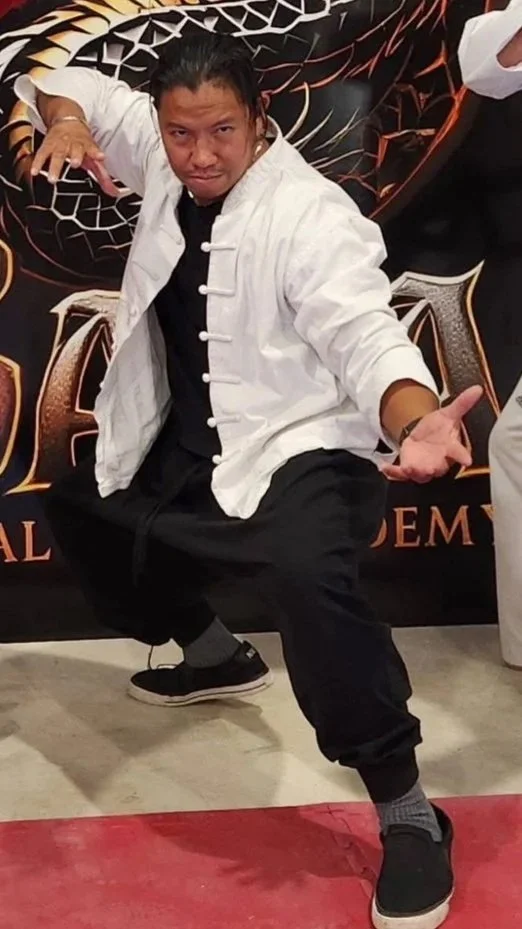
Tai chi (Taijiquan) offers a wide range of health and exercise benefits that complement the more dynamic, combative arts we teach at Baca Martial Arts Academy. While our school emphasizes Karate, Tae Kwon Do, Brazilian Jiu-Jitsu, Boxing and Kickboxing in a REAL MIXED MARTIAL ARTS approach, incorporating tai chi can enhance longevity, recovery, balance, and overall wellbeing. Key benefits:
Improved balance and reduced fall risk
Slow, deliberate weight shifts and controlled footwork strengthen proprioception and lower-body stability, especially important for older adults and students recovering from injuries.
Enhanced joint mobility and flexibility
Gentle, flowing movements increase range of motion in hips, shoulders, knees and spine without high impact, aiding longevity and reducing stiffness.
Low-impact cardiovascular conditioning
Although low intensity, continuous tai chi practice raises heart rate moderately and improves circulation—suitable for cross-training or for those easing back into exercise.
Stress reduction and better mental health
Focused breathing, mindful movement and meditative aspects lower cortisol, reduce anxiety and improve mood, which supports training focus and recovery in more intense disciplines.
Improved posture and body mechanics
Emphasis on alignment and relaxed strength helps correct habitual tension patterns, reducing risk of training-related overuse injuries and improving power generation across martial arts techniques.
Greater core strength and functional stability
Coordinated whole-body movement engages deep stabilizing muscles, benefiting striking, grappling balance, and transitional control.
Enhanced proprioception and spatial awareness
Sensitivity training in tai chi translates to better timing, distance management, and tactile responsiveness—useful in both stand-up and clinch situations.
Better breathing and energy management
Breath control practiced in tai chi improves oxygenation, endurance, and recovery between rounds or training drills.
Rehabilitation and chronic condition support
Evidence shows tai chi can help with arthritis pain, chronic pain management, hypertension, diabetes control, and improved sleep—making it a valuable adjunct to a mixed training regimen.
Accessibility and lifelong practice
Suitable for all ages and fitness levels; tai chi can be scaled to beginners, injured athletes, seniors, and elite competitors as a restorative or preventive modality.
How tai chi fits with our classes
Complementary cross-training: Use tai chi on recovery days to accelerate healing and maintain mobility without taxing the body.
Family-friendly: Gentle pacing makes tai chi ideal for multi-generational classes—parents, kids, and grandparents can train together comfortably.
Skill transfer: Improved balance, posture, breathing, and proprioception directly enhance performance in everyday life
Tai Chi will be starting up in April on Tuesdays and Thursdays. We are trying to decide on a morning class from 9a-10a
Tai chi (Taijiquan) offers a wide range of health and exercise benefits that complement the more dynamic, combative arts we teach at Baca Martial Arts Academy. While our school emphasizes Karate, Tae Kwon Do, Brazilian Jiu-Jitsu, Boxing and Kickboxing in a REAL MIXED MARTIAL ARTS approach, incorporating tai chi can enhance longevity, recovery, balance, and overall wellbeing. Key benefits:
Improved balance and reduced fall risk
Slow, deliberate weight shifts and controlled footwork strengthen proprioception and lower-body stability, especially important for older adults and students recovering from injuries.
Enhanced joint mobility and flexibility
Gentle, flowing movements increase range of motion in hips, shoulders, knees and spine without high impact, aiding longevity and reducing stiffness.
Low-impact cardiovascular conditioning
Although low intensity, continuous tai chi practice raises heart rate moderately and improves circulation—suitable for cross-training or for those easing back into exercise.
Stress reduction and better mental health
Focused breathing, mindful movement and meditative aspects lower cortisol, reduce anxiety and improve mood, which supports training focus and recovery in more intense disciplines.
Improved posture and body mechanics
Emphasis on alignment and relaxed strength helps correct habitual tension patterns, reducing risk of training-related overuse injuries and improving power generation across martial arts techniques.
Greater core strength and functional stability
Coordinated whole-body movement engages deep stabilizing muscles, benefiting striking, grappling balance, and transitional control.
Enhanced proprioception and spatial awareness
Sensitivity training in tai chi translates to better timing, distance management, and tactile responsiveness—useful in both stand-up and clinch situations.
Better breathing and energy management
Breath control practiced in tai chi improves oxygenation, endurance, and recovery between rounds or training drills.
Rehabilitation and chronic condition support
Evidence shows tai chi can help with arthritis pain, chronic pain management, hypertension, diabetes control, and improved sleep—making it a valuable adjunct to a mixed training regimen.
Accessibility and lifelong practice
Suitable for all ages and fitness levels; tai chi can be scaled to beginners, injured athletes, seniors, and elite competitors as a restorative or preventive modality.
How tai chi fits with our classes
Complementary cross-training: Use tai chi on recovery days to accelerate healing and maintain mobility without taxing the body.
Family-friendly: Gentle pacing makes tai chi ideal for multi-generational classes—parents, kids, and grandparents can train together comfortably.
Skill transfer: Improved balance, posture, breathing, and proprioception directly enhance performance in everyday life
Tai Chi will be starting up in April on Tuesdays and Thursdays. We are trying to decide on a morning class from 9a-10a